Collaborate.dev: A Real-Time Multiplayer Desktop for Coding Agents
Collaborate.dev offers a multiplayer desktop environment for coding agents, enabling real-time collaboration without the need for signup.
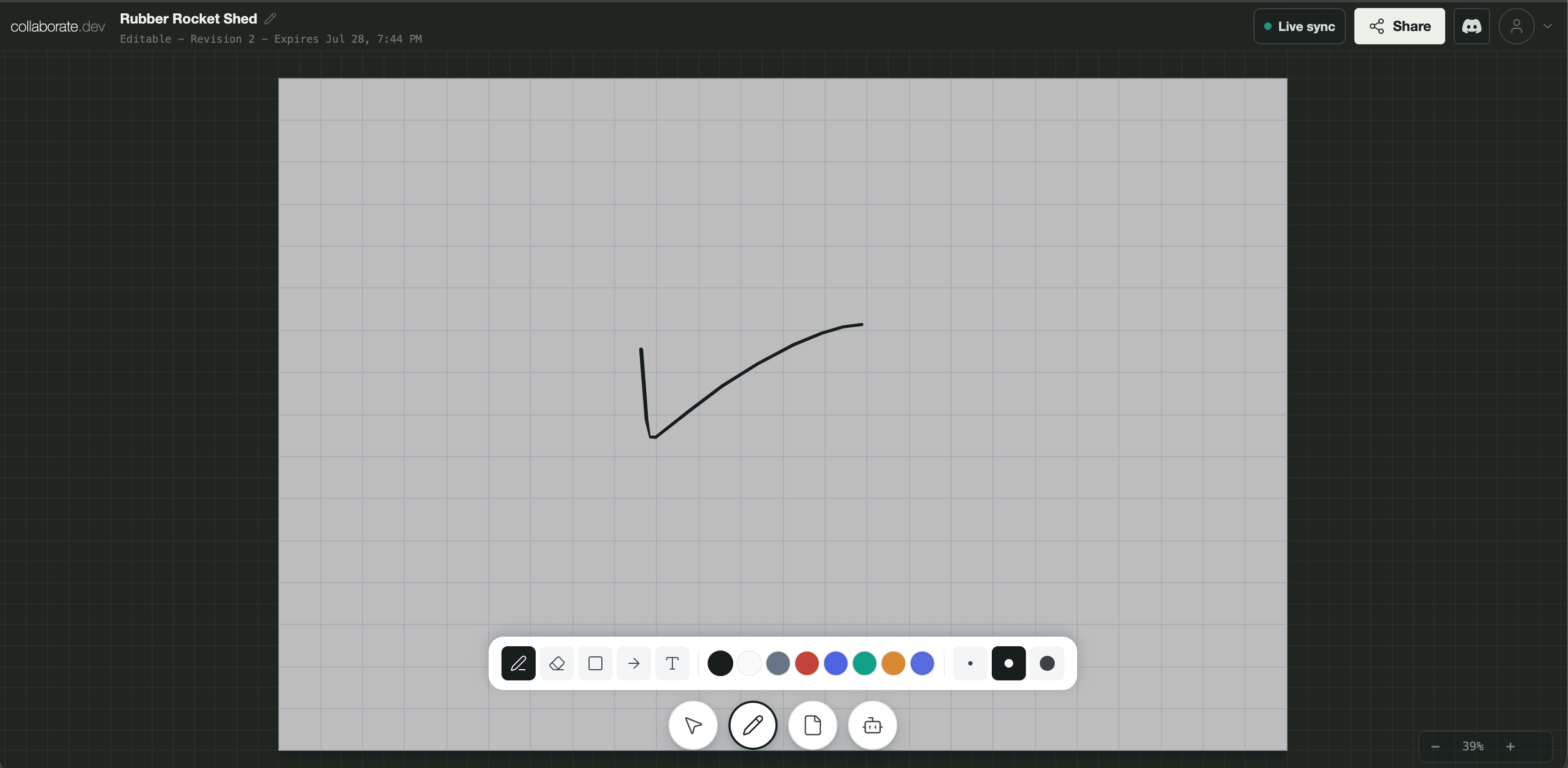
A shared desktop for you and your coding agent
Every coding agent shipped in the last two years has the same blind spot: it's built for one person. Kick off a session with Claude Code, Cursor, or Codex, and the reasoning behind every decision — why this approach and not that one, what got tried and abandoned — lives inside that one chat. Close the terminal, and it's gone. A teammate who touches the same code an hour later starts from zero, re-deriving context that already existed somewhere, just not anywhere they could see it.
That's the gap Collaborate.dev is built around. It calls itself a "multiplayer desktop for coding agents" — a shared visual workspace that sits next to whatever agent you're already using, so the context and the output are visible to more than one set of eyes at once.
How it works
The flow is deliberately short:
- Copy the agent instructions from the site.
- Paste them into your coding agent, then give it a task.
- Open the visual desktop to watch context build and output land in real time — and share that same desktop with your team so everyone is working off one shared state instead of five private chat logs.
There's no new agent to learn and no migration. Collaborate.dev doesn't replace Claude Code or Codex or whatever you're already running — it wraps a shared window around it.
Why "multiplayer" is the right frame
This isn't a one-off idea. It's part of a broader shift happening across agent tooling right now: teams that adopted coding agents early are discovering that the model was never really the bottleneck — coordination is. You don't know who's working on what. You can't see that an agent already tried the approach you're about to attempt and dropped it. The context that would save you the hour is real, it's just trapped in someone else's private session.
The fixes taking shape across the industry look similar from a distance: cloud-hosted or shared sessions that anyone on the team can join, dashboards that show what every agent is doing across every repo, and shared files or workspaces that outlive any single chat. Collaborate.dev's version of that idea is a visual desktop rather than a full hosted environment — lighter weight, and pointed at a specific moment: the gap between "I ran an agent" and "my team can see what it did."
No account, no lock-in
Two choices stand out. First, there's no signup to start — you get a working desktop the moment you open the site, not after a form. Second, it works with any coding agent rather than tying you to one vendor's ecosystem, which matters if your team is already split across two or three different tools.
The tradeoff is that anonymous desktops are temporary by design — one expires 48 hours after it's created. If a session is worth keeping past that window, logging in claims it. It's a small piece of friction placed exactly where it should be: free and frictionless to try, deliberate to keep.
Who this is for
The clearest fit is any team already running coding agents individually but without a shared view of what those agents are doing — the situation where two engineers, unknown to each other, are one Slack message away from re-solving the same problem twice. For a solo builder, the value is thinner; the pitch is explicitly about the moment a second person (or a second agent) needs to see what the first one already figured out.
Try it: collaborate.dev